


Article: Pencil Liner vs Bullnose: How to Choose the Right Marble Trim
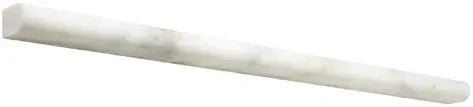
Pencil Liner vs Bullnose: How to Choose the Right Marble Trim
You have chosen your marble, onyx or travertine tile. Now comes a smaller decision that changes how finished the whole wall looks: which trim goes on the edges? The two most common choices are the pencil liner and the bullnose liner. They are often confused, they come in the same 12-inch length and the same finishes, and they do very different jobs.
This article explains the difference using our Calacatta Gold trims as the example, shows which of our stones offer each profile, and helps you choose in about a minute. For all six trim profiles, see our Tile Trim & Liner Guide.
The Short Answer
- Choose a bullnose liner when you need to finish an edge: the place where tile stops and paint or drywall begins. It gives a clean, quiet, rounded end to the tile.
- Choose a pencil liner when you want to draw a line: a slim, rounded accent that frames a panel, caps a backsplash or runs as a band through a field of tile.
- Use both when you want a finished edge and a decorative detail in the same installation.
What Is a Pencil Liner?
A pencil liner is a slim trim with a rounded, domed face. Our pencil liners are ½×12 inches (Carrara White Gioia also comes in ⅝×12). The Calacatta Gold ½×12 Pencil Liner, for example, comes polished or honed.
Because the face is rounded and sits slightly proud of the surrounding tile, a pencil liner reads as a fine line. It catches light along its curve and adds a little shadow beside it, which is why designers use it as a detail rather than as a plain edge.
Where Pencil Liners Work Best
- A slim frame around a mosaic panel, range-hood feature or decorative insert
- A horizontal accent band running through a shower wall or backsplash
- A cap on top of a backsplash in traditional and transitional kitchens
- An inner frame around a shower niche, with a bullnose finishing the outer edge
- Layered with a bullnose or ogee liner to build a richer chair-rail or wainscot cap
What Is a Bullnose Liner?
A bullnose liner is a flatter strip with a smoothly rounded finished edge. Our stone bullnose liners are ¾×12 inches. The Calacatta Gold ¾×12 Bullnose Liner also comes polished or honed.

Its job is to end the tile gracefully. Instead of showing the raw cut edge of a stone tile, the rounded edge rolls the surface down toward the wall, so the installation looks finished and intentional.
Where Bullnose Liners Work Best
- The exposed top or side edge of a backsplash that stops on open wall
- The outer edges of a shower niche or window return
- The top of a half-wall, wainscot or tub-surround tile field
- Modern, minimal and quiet-luxury interiors where the trim should almost disappear
Pencil Liner vs. Bullnose: Quick Selector
| Where the tile stops | Best choice | Why |
|---|---|---|
| Backsplash ends on open wall | Bullnose | Finishes the exposed edge cleanly and quietly. A pencil liner works as a more traditional top cap. |
| Backsplash runs up to cabinets on every side | Pencil (optional) | No exposed edge to finish, so trim is purely decorative. |
| Frame around a mosaic or range-hood insert | Pencil | Draws a crisp outline without adding bulk. |
| Accent band through a shower or backsplash | Pencil | A single or doubled line reads as a deliberate detail. |
| Shower niche | Bullnose, plus pencil if desired | Bullnose finishes the edges; a pencil adds an inner frame. |
| Modern or minimal design | Bullnose | Quiet, low-profile finish. |
| Traditional or classic design | Pencil, often with bullnose | The rounded line adds the layered detail classic rooms call for. |
For outside corners, wainscot caps, crown moldings and baseboards, see Which Trim for Which Job in our trim guide.
Can You Use Pencil Liner and Bullnose Together?
Yes, and it is one of the most elegant ways to finish a stone wall. A common approach is to finish the outer edge with a bullnose liner, then set a pencil liner one tile course inside it. The bullnose handles the practical edge; the pencil adds a fine line that echoes the veining of the stone.
For a more architectural cap, layer the pencil liner with an ogee liner or chair rail, such as the Calacatta Gold 2×12 Ogee Liner.
Which Stones Offer Each Profile?
- Both pencil and bullnose: Calacatta Gold, Carrara White Gioia, Oriental White, White Thassos, Crema Marfil, Emperador Dark, Nero Marquina, Honey Onyx, and Ivory, Silver, Scabos and Noce travertine.
- Pencil only: Bianco Dolomite. Its 1×12 quarter round is the usual alternative for finishing an edge.
- Bullnose only: Vanilla Onyx.
- Ceramic wall tile: Rhythm has a ½×8 liner in each of its six colors; Zellige Charm (1×8) and Retro Revival (1×6) have a bullnose trim in each color.
See every size and finish, stone by stone, in the Trims by Stone table.
Matching the Finish
Most of our marble trims, including Calacatta Gold, come polished or honed. Emperador Dark and both onyx stones are polished. Ivory, Silver, Scabos and Noce travertine trims are honed, and the Noce pencil liner is tumbled.
- Match the field tile for a seamless, unified look. This is the safest choice for most projects.
- Contrast on purpose, such as a polished pencil liner on a honed wall, when you want the trim to catch the light as a subtle accent.
For more on how finish changes the look of marble, read Honed or Polished Marble for a Bathroom?
Check the Fit and Order Enough
Trim must work with the thickness and edge of the tile it meets. Order a sample of the trim with a sample of your tile, hold them together, and confirm the plan with your installer, especially at corners and niches.
Stone trims are sold by the piece, and each piece is 12 inches long. Add up every edge the trim will cover, divide by 12, then add 10–15% for cuts, mitered corners and veining selection. Example: a backsplash with a 96-inch top edge and two 18-inch sides needs 132 inches of bullnose: 132 ÷ 12 = 11 pieces, plus about 15% = 13 pieces. The trim guide has a quick reference for 8-inch and 6-inch ceramic trims too.
Order trim at the same time as your tile so the stone comes from the same production, and dry-lay the pieces to balance veining before setting. Learn more in Natural Stone Tile Variation Explained.
Frequently Asked Questions
What is the difference between a pencil liner and a bullnose?
A pencil liner is a slim trim with a rounded face that creates a decorative line. A bullnose liner has a rounded finished edge that ends a tile installation cleanly where it meets an open wall.
Can a pencil liner finish the edge of a backsplash?
It can cap the top of a backsplash and is a popular choice in traditional kitchens. For exposed side edges and a lower-profile finish, a bullnose liner is usually the cleaner option.
Which is more modern, pencil liner or bullnose?
Bullnose generally reads as more modern and minimal. Pencil liner has a more traditional, detailed character, although a single fine line can look crisp in contemporary spaces too.
My stone has no bullnose. What should I use?
Bianco Dolomite has a 1×12 quarter round that finishes edges and outside corners. Check the Trims by Stone table, or ask us about catalogue profiles available by quote.
Can I use these trims on a floor?
No. Pencil and bullnose liners are designed for walls, backsplashes, niches and other vertical trim applications, not for floors or shower pans. Use a baseboard where a stone floor meets the wall.
Should the trim match the finish of my tile?
Matching the finish creates a seamless look. Mixing a polished trim with honed tile is a deliberate accent that works when you want the trim to stand out.
Finish Every Edge
Our pencil and bullnose liners are cut from the same stone as our tiles and mosaics, in polished, honed or tumbled finishes depending on the stone. Shop them by profile, explore all six trim profiles in our guide, or order samples to check the fit.
Shop Pencil Liners Shop Bullnose Liners Read the Trim Guide Request Samples


Leave a comment
This site is protected by hCaptcha and the hCaptcha Privacy Policy and Terms of Service apply.