


Natural Stone Tile Variation Explained: Veining, Color, Pits, Fissures, and Shade Differences
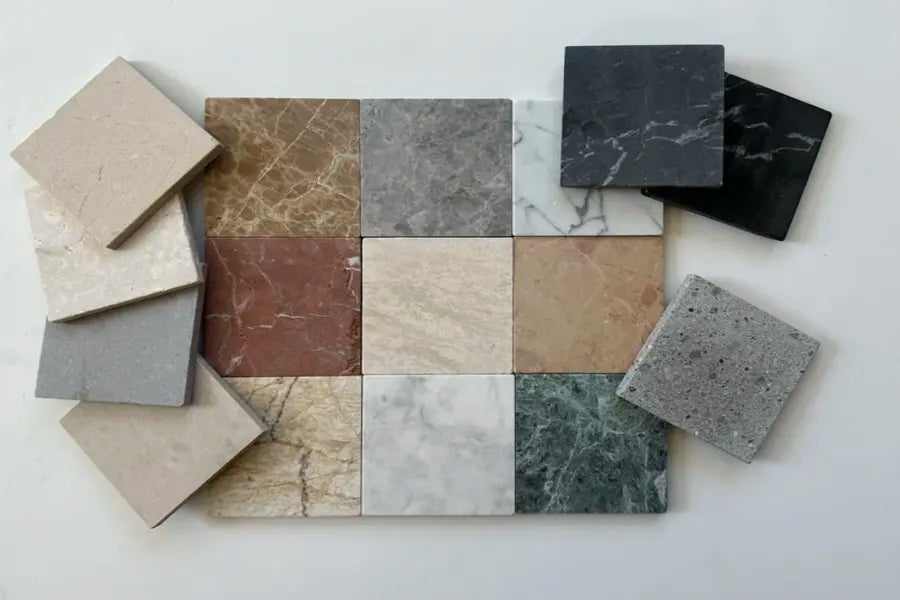
Natural stone tile is valued for its individuality. Unlike porcelain or ceramic tile, marble, travertine, limestone, and onyx are formed by nature over long periods of time. Each piece may display differences in color, veining, mineral deposits, texture, surface movement, and structural character.
These variations are not usually manufacturing defects. They are part of what makes natural stone distinctive and are often the reason designers, architects, and homeowners choose it over machine-made materials.
However, natural variation can sometimes be confused with damage, staining, cracking, or inconsistent production. Understanding the difference helps customers select material with realistic expectations and allows installers to create a more balanced finished surface.
This guide explains common natural-stone characteristics, including veining, shade variation, pits, pores, fissures, fill, edge variation, mineral markings, surface movement, and the importance of inspecting and blending tile before installation.
Why Natural Stone Tile Varies
Natural stone is quarried from large blocks created through geological processes. Pressure, heat, mineral content, sediment, groundwater, and other environmental conditions influence the appearance and structure of the stone.
Even tiles cut from the same block may not look identical. Material from different areas of the block may display lighter or darker tones, stronger or softer veining, different concentrations of minerals, and changes in texture.
Variation may occur in:
- Background color
- Vein direction
- Vein thickness
- Mineral deposits
- Clouding and movement
- Surface texture
- Pits and pores
- Fissures and natural lines
- Finish and light reflection
The degree of variation depends on the type of stone, the quarry, the block, the tile size, the surface finish, and the amount of material being installed.
Color and Shade Variation
Color variation is one of the most common characteristics of natural stone.
A white marble collection may include bright white, soft ivory, pale gray, or warmer cream backgrounds. Green marble may range from deep forest tones to lighter sage, emerald, or blue-green sections. Travertine may display beige, ivory, walnut, rust, gray, or gold tones within the same shipment.
Shade variation may be subtle or dramatic.
Low Variation
Low-variation stone has a relatively consistent background color and restrained movement. Individual tiles still differ, but the overall installation appears calm and uniform.
Moderate Variation
Moderate variation includes visible changes in shade, veining, and surface movement. This is common in many marbles, limestones, and travertines.
High Variation
High-variation stone may include strong color differences, dramatic veins, mineral deposits, and highly distinctive pieces. Onyx, heavily veined marble, and some travertines often fall into this category.
High variation should be viewed across multiple pieces rather than judged from one sample or photograph.
Why a Sample May Not Represent the Entire Order
A natural-stone sample is useful for evaluating the general color, finish, texture, and quality of the material. However, a small sample cannot represent every possible vein, shade, mineral marking, or surface characteristic found in a full order.
A sample may come from one section of a tile or one area of a stone block. The full shipment may include pieces that are lighter, darker, more heavily veined, or more softly patterned.
For this reason, customers should use samples as a general reference rather than as a guarantee that every tile will look exactly the same.
For larger or highly selective projects, reviewing current-batch photographs, multiple samples, or full-size pieces may provide a better understanding of the available variation.
Understanding Marble Veining
Veining is one of marble’s most recognizable characteristics. Veins are created by mineral deposits, pressure, and geological movement within the stone.
Marble veins may appear as:
- Fine hairline markings
- Broad flowing bands
- Cloudy movement
- Angular mineral lines
- Web-like patterns
- Bold contrasting streaks
- Soft tonal shadows
Veining may change direction from tile to tile. Some pieces may have minimal movement, while others may contain dramatic patterns.
These differences should be arranged intentionally during installation rather than treated as flaws.
Bookmatching and Directional Veining
Some projects use stone with intentional vein direction or bookmatched patterns. This requires advance planning and careful selection.
Standard tile orders are not automatically supplied as bookmatched material unless specifically stated. Installers should dry-lay tiles before installation to determine the most balanced vein arrangement.
Clouding, Movement, and Mineral Deposits
Not all natural-stone patterns appear as clear veins. Some stones display cloudy areas, tonal movement, crystallization, fossil markings, or mineral deposits.
These features may create:
- Soft shadow-like areas
- Brown, gold, gray, green, or rust-colored markings
- Crystalline sections
- Small fossil-like impressions
- Changes in translucency
- Concentrated color patches
Mineral deposits are usually natural characteristics. Their visibility may increase after polishing, sealing, or exposure to moisture.
What Are Natural Fissures?
A fissure is a naturally occurring line or separation formed within the stone during geological development.
Fissures often follow mineral veins and may appear as fine lines, narrow openings, or translucent paths. They are common in marble, onyx, travertine, and other natural stones.
A fissure does not automatically mean the tile is broken.
Characteristics of a Natural Fissure
- Often follows the stone’s natural veining
- May be visible but not structurally open
- Can have smooth or mineral-filled edges
- May continue through part of the stone
- May be reinforced with resin or mesh during production
Some fissures are stable and purely visual. Others may require reinforcement or careful placement during installation.
Fissure vs. Crack: What Is the Difference?
A natural fissure is formed during the development of the stone. A crack usually results from impact, stress, handling, installation pressure, movement, or shipping damage.
A Natural Fissure May:
- Follow the mineral pattern
- Have smooth or naturally formed edges
- Remain stable when the tile is handled
- Be filled or reinforced during fabrication
- Appear in several tiles from the same stone
A Crack May:
- Appear sharp or recently separated
- Extend through the entire tile
- Cause the tile to flex or split
- Result from impact or improper handling
- Make the piece unsuitable for installation
When there is uncertainty, the tile should not be installed until the supplier or installer has reviewed it.
Pits, Pores, and Small Holes
Pits and pores are common in several types of natural stone, especially travertine and some limestones.
Travertine forms around mineral springs and naturally contains cavities created by gases, water movement, and mineral deposition.
These openings may be:
- Left unfilled for a rustic appearance
- Filled with cement-based material
- Filled with resin
- Partially exposed after honing or tumbling
- Revealed during cutting or installation
Small holes may become visible over time as factory fill wears or as concealed cavities are exposed. This is a normal maintenance consideration for some travertine products.
Filled vs. Unfilled Travertine
Filled Travertine
Filled travertine has many of its natural holes filled during production. The surface is then honed, polished, brushed, or otherwise finished.
Filled travertine generally feels smoother and may be easier to maintain in interior applications.
Unfilled Travertine
Unfilled travertine retains more open pores and cavities. It has a more rustic and textured appearance.
During installation, grout may be used to fill some of these openings, depending on the desired finish and application.
Filled and unfilled travertine should not be expected to look or perform exactly the same.
Resin, Mesh, and Stone Reinforcement
Some natural stones are reinforced during manufacturing to improve stability and usability.
Reinforcement may include:
- Resin filling
- Fiberglass mesh backing
- Epoxy repair
- Rod reinforcement
- Surface filling
These treatments are common in fragile, highly veined, or translucent stones. Their presence does not automatically indicate poor-quality material.
Onyx and some dramatic marbles often require reinforcement because their natural structure is more delicate.
Surface Fill and Factory Repairs
Natural stone may contain factory-applied fill in pits, fissures, corners, or surface openings.
Factory repairs are used to stabilize and finish the stone before sale. Small filled areas are common in many natural products and are generally considered part of normal production.
The fill may appear slightly different from the surrounding stone in color, sheen, or texture. It may also become more visible under certain lighting conditions.
Edge Chipping and Minor Corner Damage
Natural stone edges can be more delicate than porcelain or ceramic tile, especially in thin formats, mosaics, trims, and highly veined materials.
Minor edge chipping may occur during cutting, handling, packaging, transportation, or installation.
Small chips near perimeter cuts may be usable because they can often be trimmed or positioned beneath baseboards, cabinets, trims, or adjoining surfaces.
However, significant breakage, structural cracking, or damage that makes the material unusable should be documented and reported promptly.
Finish Variation
The same stone can look substantially different in honed, polished, brushed, sandblasted, tumbled, or leathered finishes.
Honed Finish
A honed finish softens color and veining and creates a low-sheen surface.
Polished Finish
A polished finish deepens color, increases contrast, and reflects more light.
Tumbled Finish
A tumbled finish creates softened edges and a more aged or rustic appearance.
Brushed Finish
A brushed finish emphasizes texture and may highlight softer areas of the stone.
Variation may appear stronger or weaker depending on the finish. Physical samples should be reviewed in the actual finish being considered.
Wet and Dry Color Differences
Natural stone often appears darker when wet.
This temporary darkening may occur during installation, sealing, cleaning, or regular use. Some stones return to their normal color after drying, while others may retain a slightly deeper appearance after sealing.
Moisture can also reveal hidden veining, mineral lines, fill, or porosity.
When comparing samples, review the stone both dry and after applying the intended sealer to spare material.
Stone Variation After Sealing
Sealers may alter the appearance of natural stone.
A standard penetrating sealer may have minimal visual effect, while an enhancing sealer may deepen color and increase contrast.
Before sealing an entire installation:
- Test the sealer on spare material.
- Allow the sample to cure fully.
- Review the result under the room’s actual lighting.
- Confirm compatibility with the stone and grout.
- Follow the sealer manufacturer’s instructions.
Once an enhancing sealer has been applied, the deeper color may be difficult to reverse.
Differences Between Marble, Travertine, Limestone, and Onyx
Marble
Marble commonly displays veining, mineral movement, tonal variation, fissures, and occasional pits. The degree of movement ranges from subtle to dramatic.
Travertine
Travertine naturally contains pits, pores, banding, tonal variation, and mineral deposits. Filled areas and open cavities are common characteristics.
Limestone
Limestone often has a softer and more uniform appearance, but may contain fossils, shells, mineral lines, small pits, and tonal movement.
Onyx
Onyx is often translucent and highly variable. It may display dramatic banding, color changes, crystallization, fissures, and reinforced areas.
Onyx is typically more delicate than marble or limestone and requires careful handling and installation.
Why Dry-Laying Is Essential
Dry-laying means arranging the tile before permanent installation.
This step allows the installer and customer to review the overall balance of color, veining, movement, and distinctive pieces.
Dry-Laying Helps Prevent:
- Clusters of dark or light tiles
- Unbalanced vein direction
- Highly distinctive pieces appearing in unwanted locations
- Visible box-to-box shade sections
- Unexpected pattern concentration
- Poor use of cut pieces
Natural stone should never be installed one box at a time without blending material from several boxes.
How to Blend Natural Stone Tile
- Open several boxes before installation.
- Separate lighter, medium, and darker pieces.
- Review vein direction and movement.
- Identify highly distinctive pieces.
- Arrange the tiles across the installation area.
- Step back and review the overall balance.
- Adjust the layout before adhesive is applied.
The objective is not to make every tile look identical. The objective is to distribute natural variation in a balanced and intentional way.
How Much Extra Natural Stone Should You Order?
Additional material is necessary for cuts, breakage, layout adjustments, shade blending, natural selection, and future repairs.
- Order approximately 10%–15% additional material for straightforward layouts.
- Consider approximately 15%–20% additional material for diagonal installations, checkerboards, herringbone patterns, complex rooms, or projects with extensive cuts.
- Highly variable stone may require additional material when the project has strict color or veining preferences.
Retaining extra tile after installation is strongly recommended because future quarry blocks or production batches may not match the original material.
What Is Usually Considered Normal Variation?
Depending on the stone, normal characteristics may include:
- Color and shade differences
- Veining and movement
- Mineral deposits
- Small pits and pores
- Natural fissures
- Resin-filled areas
- Mesh backing
- Minor edge variation
- Differences in reflectivity
- Natural surface texture
- Fossil or shell markings
The expected range depends on the specific stone. Some products are naturally more consistent, while others are selected specifically for dramatic movement.
What May Be Considered Damage?
Potential damage may include:
- Tiles broken into multiple unusable pieces
- Fresh structural cracks caused by impact
- Severe corner loss affecting installation
- Deep scratches caused during handling or transportation
- Major surface damage unrelated to the stone’s natural characteristics
- Packaging or pallet damage associated with broken material
Customers should inspect shipments immediately upon arrival and document any suspected shipping damage before installation.
Inspecting a Natural Stone Shipment
All orders should be inspected as soon as they arrive.
- Check the cartons, crates, or pallets for visible damage.
- Note any damage on the carrier’s delivery receipt before the driver leaves.
- Open and inspect multiple boxes.
- Photograph broken pieces and packaging.
- Record affected quantities and item numbers.
- Keep all packaging and damaged material until the claim is reviewed.
- Do not install questionable or damaged pieces.
Even when exterior packaging appears intact, concealed damage may exist. Prompt inspection and documentation help preserve eligibility for a shipping claim.
Installation Indicates Acceptance
Natural stone should be fully inspected before installation.
Once material has been installed, it may be difficult to determine whether a concern existed before installation or resulted from cutting, setting, grouting, construction activity, or improper maintenance.
For this reason, installation generally indicates acceptance of the material’s color, variation, finish, sizing, and visible characteristics.
Any concern should be reported before the tile is cut or installed.
When to Contact the Supplier
Contact the supplier before installation when:
- The shipment contains significant breakage
- The material appears different from the product ordered
- There is suspected shipping damage
- Several tiles have structural cracks
- The finish appears incorrect
- The tile size or thickness does not match the order
- The customer is unsure whether a feature is natural or defective
Photographs should include close-up views and wider images showing multiple pieces together. This provides better context than a single close-up image.
Frequently Asked Questions
Why do my marble tiles look different from one another?
Marble is a natural material. Differences in background color, veining, mineral deposits, and movement are expected. Tiles should be blended from multiple boxes before installation.
Are veins in marble considered cracks?
No. Veins are natural mineral patterns. Some veins may contain fissures, but a visible line does not automatically mean the tile is structurally cracked.
What is the difference between a fissure and a crack?
A fissure forms naturally within the stone, while a crack is generally caused by impact, stress, handling, movement, or installation conditions.
Are holes in travertine normal?
Yes. Travertine naturally contains pits and pores. The stone may be supplied filled, unfilled, or partially filled depending on the product and finish.
Why does natural stone look darker when wet?
Water temporarily increases color depth and contrast in many natural stones. Some stones return to their original appearance after drying, while sealing may create a more permanent color change.
Does sealer make natural stone completely stain-proof?
No. Sealer can reduce absorption and provide more time to clean spills, but it does not make stone completely stain-proof, waterproof, or resistant to acidic etching.
Should I blend tiles from different boxes?
Yes. Blending several boxes helps distribute shade, veining, texture, and surface variation evenly throughout the installation.
How much extra natural stone should I order?
Approximately 10%–15% additional material is commonly recommended for straightforward layouts. Complex patterns, diagonal installations, extensive cuts, and highly variable stone may require 15%–20% or more.
Can I return natural stone because the veining is different from the sample?
A sample represents the general material but cannot show the full range of natural variation. Return eligibility depends on the supplier’s policy and whether the material has been installed, cut, or altered.
Are minor chips considered defective?
Minor edge chips may occur in natural stone and can sometimes be used in cut areas. Significant damage that makes pieces unusable should be documented and reported before installation.
Explore Natural Stone Tile
Arda Ogan Tile Store offers marble, travertine, limestone, onyx, mosaics, trims, and custom-produced natural stone formats for residential, commercial, hospitality, and architectural projects.
Browse our collections, request samples, or contact our team for assistance with material selection, variation, finish options, quantities, custom fabrication, and professional project pricing.


Leave a comment
This site is protected by hCaptcha and the hCaptcha Privacy Policy and Terms of Service apply.