

Zellige Tile Sizes and Shapes: How to Choose the Right Format for Your Project
Zellige tile is known for its handmade character, luminous glaze, color variation, and subtly irregular edges. While color often receives the most attention, the size and shape of the tile can have an equally important effect on the finished installation.
A classic 4×4 square creates a very different appearance from a narrow 2×6 rectangle, elongated oval, circular mosaic, or crosshatch pattern. The right format depends on the room, surface area, design style, installation layout, and amount of visual movement you want to create.
This guide explains the most popular Zellige tile sizes and shapes, where each format works best, and what to consider before selecting material for a kitchen backsplash, bathroom wall, shower surround, fireplace, bar, or decorative feature.
What Makes Zellige Tile Different?
Authentic Zellige is a handmade Moroccan tile traditionally produced from clay, shaped and finished by artisans, and coated with a richly reflective glaze.
Unlike machine-made tile, authentic Zellige is not intended to appear perfectly uniform. Natural characteristics may include:
- Subtle differences in size and thickness
- Irregular or softly chipped edges
- Variation in glaze depth and color
- Small surface pits or texture
- Light reflection that changes from piece to piece
- Visible handmade character
These variations allow light to move across the surface and give the finished installation its distinctive depth.
Zellige should not be selected when a perfectly flat, identical, machine-made appearance is required. Its beauty comes from the collective effect of many individually varied pieces.
Why Tile Size and Shape Matter
Tile format influences the rhythm, scale, and visual energy of a wall.
Smaller tiles create more grout lines and more individual reflections. Larger or simpler formats create a calmer field with fewer interruptions. Elongated shapes emphasize direction, while circles and geometric mosaics create greater movement and texture.
When comparing formats, consider:
- The dimensions of the wall or backsplash
- The size of the room
- The number of corners, outlets, and interruptions
- Whether the surface should feel calm or decorative
- The style of cabinetry, fixtures, and surrounding materials
- The installation pattern
- The amount of cutting required
4×4 Square Zellige Tile
The 4×4 square is one of the most recognizable Zellige formats. It offers a balanced scale that allows the handmade glaze and edge variation to remain clearly visible without creating an overly busy surface.
Because the shape is simple, it can work in traditional, Mediterranean, transitional, contemporary, and eclectic interiors.
Best Applications for 4×4 Zellige
- Kitchen backsplashes
- Bathroom walls
- Shower walls
- Powder rooms
- Fireplace surrounds
- Bar backsplashes
- Decorative wall panels
Why Choose a 4×4 Square?
- Classic and versatile proportions
- Allows glaze variation to become a focal point
- Works with straight or diagonal layouts
- Suitable for both small and large wall areas
- Easy to coordinate with natural stone, wood, and plaster
A straight grid creates a clean and architectural appearance. Rotating the same square format diagonally introduces more movement and may make the pattern feel more traditional.
Arda Ogan’s authentic handmade 4×4 Zellige tiles feature glossy surfaces and intentional variation. Because the tiles are handmade, nominal dimensions and thickness may vary slightly from piece to piece.
2×6 Rectangular Zellige Tile
A 2×6 rectangular Zellige tile combines the handmade quality of Moroccan tile with the familiar proportions of a subway tile.
The elongated shape creates directional movement and can make a wall appear wider or taller depending on the installation pattern.
Best Applications for 2×6 Zellige
- Kitchen backsplashes
- Range walls
- Bathroom vanity walls
- Shower walls
- Fireplace surrounds
- Built-in niches
- Bar and hospitality interiors
Popular Layouts for 2×6 Tile
Running Bond
A running-bond layout creates the familiar offset appearance associated with subway tile. With Zellige, the handmade edges and glaze variation soften the regularity of the pattern.
Stacked Horizontal
A horizontal stack feels clean and contemporary. It can visually widen a backsplash or narrow wall.
Stacked Vertical
A vertical stack draws the eye upward and can make a shower wall, fireplace, or compact room feel taller.
Herringbone
A herringbone installation creates more movement and decorative detail. It requires more planning, cutting, and material than a standard stacked layout.
Because handmade Zellige pieces may vary, an experienced installer should establish a balanced layout rather than attempting to force every tile into a perfectly uniform grid.
2×6 Long Oval Zellige Tile
The 2×6 long oval offers a softer and more sculptural alternative to a rectangular subway tile.
Its rounded ends introduce rhythm without the sharp corners of a traditional rectangle. The format can feel contemporary, Art Deco-inspired, organic, or decorative depending on the color and layout.
Best Applications for Long Oval Zellige
- Feature backsplashes
- Powder room walls
- Bar fronts and backsplashes
- Fireplace surrounds
- Decorative niches
- Boutique hospitality interiors
- Statement walls
Why Choose a Long Oval?
- Distinctive shape with soft edges
- Creates repeated movement across a wall
- Works well in both monochromatic and multicolor designs
- Offers a more unusual alternative to subway tile
- Highlights glossy glaze and reflected light
Long oval Zellige is especially effective in smaller areas where the shape can be appreciated at close range. It can also be used across a larger wall for a highly decorative, continuous surface.
Circle Zellige Mosaic
Circle mosaics introduce a playful yet refined geometry to handmade Zellige.
The repeated circular pieces create more grout lines and a greater concentration of light reflections than larger field tiles. This makes the surface feel textured, animated, and visually detailed.
Best Applications for Circle Mosaics
- Kitchen backsplashes
- Bathroom feature walls
- Vanity walls
- Shower walls where approved
- Decorative niches
- Bar backsplashes
- Commercial feature walls
Circle mosaics are typically mounted in sheets to simplify installation, but careful alignment remains important. The installer should check sheet placement to avoid visible seams or repeated spacing lines.
Arda Ogan’s Zellige circle mosaics are hand-cut and glossy, with intentional variation in color, glaze, and surface character.
Crosshatch Grid Zellige Mosaic
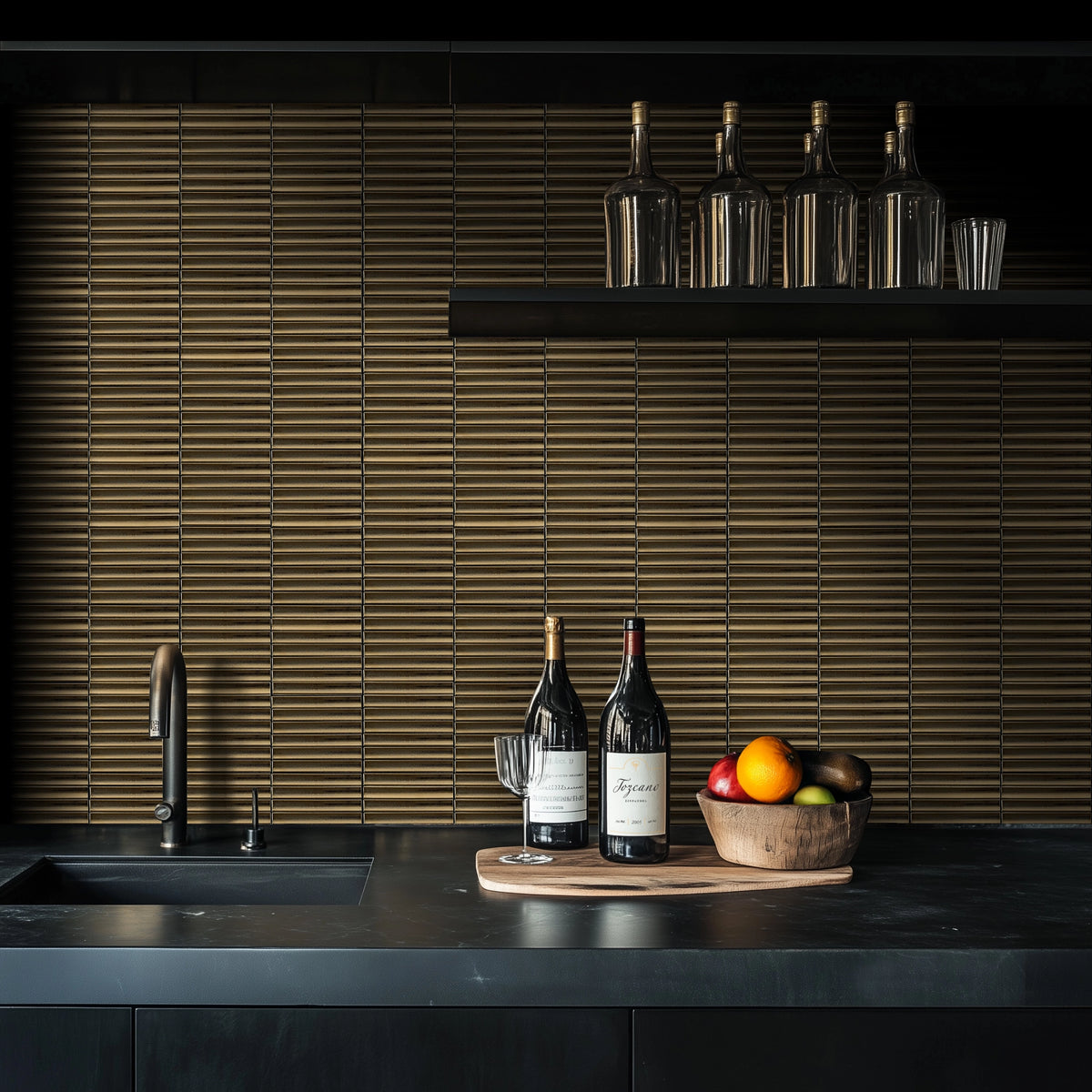
A crosshatch grid mosaic uses small rectangular pieces arranged in alternating directions. The result is a woven, architectural pattern with more visual texture than a standard stacked layout.
This format works especially well when a designer wants the wall to feel handcrafted and geometric at the same time.
Best Applications for Crosshatch Mosaics
- Kitchen backsplashes
- Bathroom walls
- Powder rooms
- Fireplace surrounds
- Built-in niches
- Decorative wall panels
- Hospitality and retail interiors
Why Choose a Crosshatch Pattern?
- Creates a woven geometric effect
- Adds movement without using multiple colors
- Highlights handmade surface variation
- Works well in compact decorative areas
- Can serve as a focal point within a larger installation
A single-color crosshatch mosaic can feel subtle and textural, while a multicolor composition creates a more expressive statement.
Zellige Checkerboard Tile
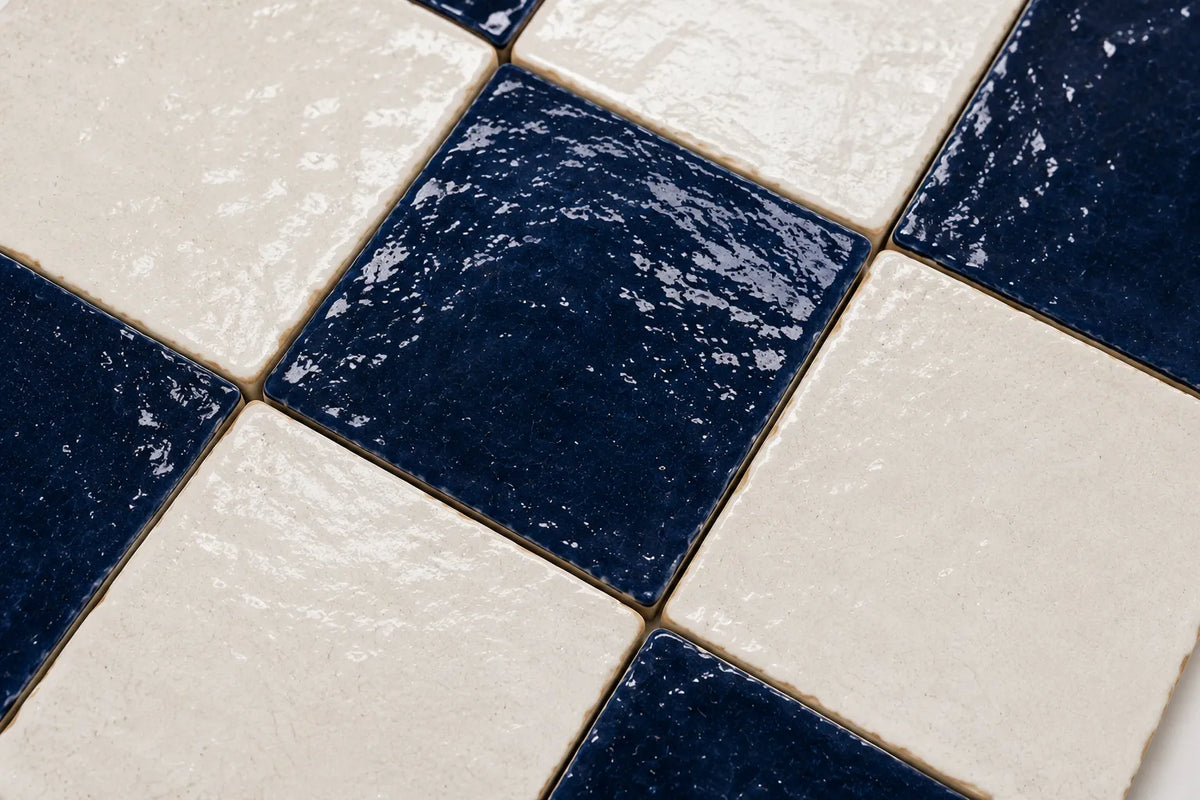
Zellige checkerboard tile combines the familiar alternating-color pattern with the irregular surface and luminous glaze of handmade Moroccan tile.
Unlike a highly uniform porcelain checkerboard, Zellige checkerboards have softer edges, color variation, and changing reflections. This gives the pattern a more relaxed and artisanal appearance.
Best Applications for Zellige Checkerboards
- Kitchen backsplashes
- Powder room walls
- Fireplace surrounds
- Bar backsplashes
- Decorative wall panels
- Hospitality feature walls
Arda Ogan’s Signature Checkerboards™ pair carefully selected Zellige colors to create distinctive combinations ranging from warm neutrals to deep indigo, terracotta, ivory, sand, and espresso tones.
Zellige checkerboard products should be used only in applications approved for the specific product. Arda Ogan’s current Zellige collection is intended for wall use.
Which Zellige Format Is Best for a Kitchen Backsplash?
The best format depends on the size and style of the kitchen.
Choose 4×4 Squares When:
- You want a classic handmade appearance
- The glaze and color variation should be the main feature
- You prefer a balanced pattern with moderate grout lines
- The backsplash includes several corners or interruptions
Choose 2×6 Rectangles When:
- You want the wall to feel wider or taller
- You prefer a subway, stacked, vertical, or herringbone pattern
- The kitchen has long uninterrupted backsplash areas
- You want traditional proportions with handmade character
Choose Long Ovals When:
- You want a distinctive statement backsplash
- The room needs softer geometry
- You are designing a bar, powder room, or decorative focal area
Choose Mosaics When:
- You want more texture and pattern
- The installation area is relatively compact
- You want to highlight a niche or feature section
- The wall should have a jewelry-like decorative quality
Which Zellige Format Is Best for a Bathroom?
Bathrooms can support both simple field tiles and more decorative mosaic formats.
For a calm bathroom, consider a 4×4 square or stacked 2×6 rectangle in a single color. For a more decorative powder room or vanity wall, long ovals, circles, crosshatch mosaics, or checkerboards can create a stronger focal point.
Before selecting any tile for a bathroom or shower, confirm:
- The product is approved for the intended wall application
- The installation system is suitable for wet areas
- The substrate has been properly prepared
- The installer understands handmade tile variation
- The appropriate sealant and grout have been selected
Arda Ogan’s current Zellige products are intended for wall use and should not be used on shower pans or submerged pool applications.
Choosing Zellige for a Fireplace Surround
Zellige works particularly well around fireplaces because the uneven glazed surface reflects both daylight and firelight.
Square and rectangular formats create a more architectural surround, while ovals, circles, crosshatch mosaics, and checkerboards create a more decorative composition.
Always confirm that the product, adhesive, substrate, and installation method are appropriate for the fireplace location and expected surface temperatures.
How Tile Size Changes the Appearance of a Room
Smaller Formats
Smaller Zellige pieces create more grout lines and more individual reflections. They can make a surface feel detailed, decorative, and highly textured.
They are especially effective for:
- Powder rooms
- Niches
- Small backsplashes
- Bar areas
- Fireplace details
Medium Formats
Formats such as 4×4 squares and 2×6 rectangles provide a useful balance between handmade detail and visual calm.
They work well for:
- Full kitchen backsplashes
- Shower walls
- Bathroom walls
- Fireplace surrounds
- Commercial feature walls
Decorative Mosaics
Circle and crosshatch mosaics introduce more complex geometry. They work best when the pattern is intentionally featured rather than visually crowded by competing materials.
How Grout Affects Zellige Tile
Grout color and joint width have a strong effect on the finished appearance.
Matching Grout
A grout color close to the tile color creates a more continuous surface and allows glaze variation to remain the main feature.
Contrasting Grout
Contrasting grout emphasizes each tile and makes the pattern more graphic. It can also highlight the natural irregularity of the tile edges.
Warm Neutral Grout
A soft neutral grout can provide balance when the tile has significant color variation or when two colors are used together.
Always test grout against actual tile samples before installation. Grout should not be selected from a digital screen alone.
Because authentic Zellige has uneven edges and slight dimensional variation, grout joints may not appear perfectly uniform. This is part of the intended handmade appearance.
How Much Extra Zellige Tile Should You Order?
Additional material is needed for cutting, breakage, layout adjustments, color blending, and future repairs.
- Order approximately 10%–15% additional material for simple installations.
- Consider approximately 15%–20% additional material for diagonal, herringbone, multicolor, or complex layouts.
- Projects with many corners, outlets, niches, or perimeter cuts may require additional overage.
Handmade tile should be blended across multiple boxes before installation. Additional material gives the installer more flexibility to distribute color and surface variation throughout the project.
Inspecting and Blending Zellige Before Installation
All Zellige should be reviewed before installation begins.
- Open several boxes at the same time.
- Inspect the range of colors, glazes, edges, and textures.
- Dry-lay a representative section.
- Blend pieces from different boxes.
- Distribute lighter, darker, smoother, and more textured pieces evenly.
- Confirm the final layout before adhesive is applied.
Do not install all tiles from one box before opening the next. This may create visible sections of concentrated color or glaze variation.
Installation generally indicates acceptance of the tile, so concerns should be addressed before the material is permanently set.
Should Zellige Tile Be Sealed?
Sealing requirements depend on the tile, glaze coverage, grout, installation method, and application.
Some Zellige products have exposed clay along edges or small unglazed areas that may absorb moisture or grout pigment. A penetrating sealer may be recommended before grouting, particularly when using contrasting or dark grout.
Always test the selected sealer on spare material before treating the entire installation. Follow the tile supplier’s, sealer manufacturer’s, and installer’s recommendations.
Choosing the Right Installer
Zellige installation requires a different approach from installing highly uniform machine-made tile.
An experienced installer should understand how to:
- Blend handmade variation
- Manage differences in thickness
- Establish a visually balanced layout
- Cut irregular pieces carefully
- Adjust adhesive depth where necessary
- Work with nonuniform grout joints
- Protect the glazed surface during installation
The goal is not to remove every variation. The goal is to arrange the material so the variation feels intentional and balanced.
Frequently Asked Questions
What is the most traditional Zellige tile size?
The 4×4 square is one of the most recognizable and versatile Zellige formats. It works well for kitchen backsplashes, bathroom walls, shower surrounds, fireplaces, and decorative wall applications.
Can 2×6 Zellige tile be installed in a herringbone pattern?
Yes. A 2×6 rectangle can be installed in a herringbone pattern, although the layout requires careful planning, additional cuts, and more overage than a standard stacked or running-bond installation.
Can Zellige tile be used on a shower floor?
Arda Ogan’s current Zellige products are intended for wall use and are not recommended for shower pans. Always review the approved applications of the specific product before installation.
Is Zellige suitable for shower walls?
Many Zellige products can be used on shower walls when properly installed with a suitable waterproofing and installation system. Confirm the specifications of the selected product and work with an installer experienced in handmade tile.
Can Zellige be used in a swimming pool?
Arda Ogan’s current Zellige collection is not intended for submerged pool applications or waterlines. Select a tile specifically rated for pools and continuous submersion.
Are Zellige tiles supposed to have uneven edges?
Yes. Irregular edges, slight differences in size and thickness, glaze variation, small pits, and surface texture are normal characteristics of authentic handmade Zellige.
What grout color should I use with Zellige?
A matching grout creates a softer and more continuous appearance, while contrasting grout emphasizes the individual pieces and pattern. Test grout samples with the actual tile before making a final selection.
How much extra Zellige should I order?
Approximately 10%–15% additional material is generally recommended for simple layouts. Herringbone, diagonal, multicolor, mosaic, and complex installations may require approximately 15%–20% additional material.
Explore Authentic Handmade Moroccan Zellige
Arda Ogan Tile Store offers authentic handmade Moroccan Zellige in classic squares, elongated formats, decorative mosaics, and exclusive color combinations.
Browse the collection, request samples, or contact our team for assistance with format selection, quantities, color coordination, custom production, and professional project pricing.

Leave a comment
This site is protected by hCaptcha and the hCaptcha Privacy Policy and Terms of Service apply.