

Honed or Polished Marble for a Bathroom? A Room-by-Room Selection Guide
Choosing between honed and polished marble is one of the most important decisions in a bathroom project. Both finishes reveal the natural beauty of marble, but they differ in appearance, reflectivity, maintenance, texture, and suitability for different surfaces.
Polished marble creates a glossy, reflective surface that intensifies color and veining. Honed marble has a smooth, low-sheen finish that feels softer, quieter, and more understated.
The best choice depends on where the marble will be installed, how the bathroom will be used, the amount of water exposure, the desired design style, and the level of maintenance the homeowner is prepared to manage.
This guide compares honed and polished marble for bathroom floors, shower walls, vanity backsplashes, tub surrounds, powder rooms, and decorative details.
What Is Honed Marble?
Honed marble is ground to a smooth surface but is not polished to a high gloss. The result is a matte or satin-like appearance with limited reflection.
The honing process softens the visual contrast of the stone. Veining may appear quieter, and the overall surface often feels more natural and understated.
Characteristics of Honed Marble
- Smooth, low-sheen surface
- Soft and understated appearance
- Less reflective than polished marble
- Often preferred for floors and high-use surfaces
- May disguise light scratching more effectively
- Can show darkening when exposed to moisture
- Typically requires sealing and proper maintenance
Honed marble works especially well in bathrooms designed around calm colors, natural materials, soft lighting, plaster finishes, and understated luxury.
What Is Polished Marble?
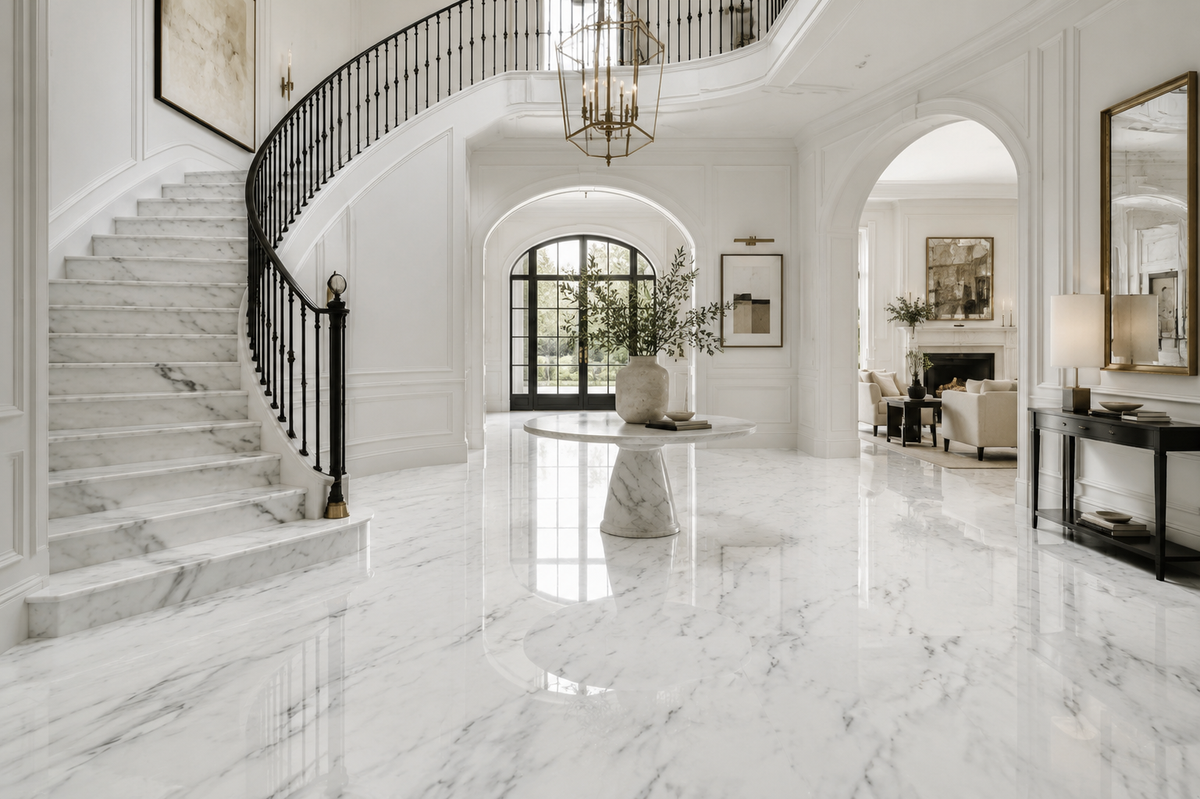
Polished marble is mechanically finished to create a glossy, reflective surface. This process deepens the color of the stone and makes the veining appear more pronounced.
Polished marble can make a bathroom feel brighter because it reflects both natural and artificial light.
Characteristics of Polished Marble
- Glossy and reflective surface
- Enhanced color and veining
- Formal and luxurious appearance
- Easy to wipe clean when properly maintained
- May show scratches, etching, and water spots more readily
- Can become slippery when wet
- Usually preferred for walls and decorative applications
Polished marble is often selected for vanity walls, tub surrounds, shower walls, feature walls, and other vertical surfaces where its reflective quality can be fully appreciated.
Honed vs. Polished Marble: Quick Comparison
| Feature | Honed Marble | Polished Marble |
|---|---|---|
| Appearance | Matte to satin | Glossy and reflective |
| Color | Softer and more muted | Deeper and more saturated |
| Veining | Subtle and understated | More visible and dramatic |
| Light Reflection | Low | High |
| Slip Consideration | Generally offers more surface grip | Can be more slippery when wet |
| Best Uses | Floors, shower floors when approved, calm interiors | Walls, backsplashes, tub surrounds, decorative surfaces |
| Maintenance Visibility | May disguise fine scratches better | May show etching and water spots more clearly |
These differences are general guidelines. The actual performance of a marble product depends on the stone, tile size, finish quality, installation method, maintenance, and intended application.
Which Finish Is Better for Bathroom Floors?
Honed marble is generally the more practical choice for bathroom floors.
Its lower sheen and more subdued surface often provide better visual and tactile comfort in areas exposed to moisture. It also tends to disguise minor wear more effectively than a highly polished finish.
Advantages of Honed Marble on Bathroom Floors
- Softer, less reflective appearance
- Generally more suitable for walking surfaces
- May provide more grip than polished marble
- Less likely to show fine scratches prominently
- Works well in both traditional and contemporary bathrooms
However, honed marble is still natural stone. It is not automatically slip-proof, stain-proof, or maintenance-free.
Tile size also matters. Smaller mosaics create more grout joints, which may provide additional traction compared with large-format tiles.
Can Polished Marble Be Used on Bathroom Floors?
Polished marble can be used on some bathroom floors, but it requires careful consideration.
A polished surface can become slippery when wet and may show scratches, water marks, and etching more clearly. It may be better suited to lower-traffic powder rooms or decorative areas where water exposure is limited.
Before using polished marble on a bathroom floor, review the product specifications and consult the installer, architect, or design professional responsible for the project.
Which Finish Is Better for Shower Walls?
Both honed and polished marble can create beautiful shower walls when the selected product is appropriate for wet-area wall applications.
The choice is primarily based on design preference, maintenance expectations, and how much visual movement the homeowner wants.
Honed Marble Shower Walls
Honed marble creates a calm, spa-like atmosphere. The reduced reflectivity softens the appearance of the stone and works well with natural wood, brushed metal, plaster, and warm neutral colors.
Honed shower walls may also make water spots and light surface wear less visually obvious than polished stone.
Polished Marble Shower Walls
Polished marble creates a more luminous and formal appearance. It reflects light across the shower and emphasizes veining and color contrast.
Because polished marble is less visually forgiving, water spots, soap residue, etching, and mineral deposits may be more noticeable.
Proper sealing, ventilation, cleaning, and maintenance are important for either finish.
Which Finish Is Better for a Shower Floor?
For shower floors, honed mosaics are generally preferred over polished large-format marble.
Small-format mosaic tiles create more grout joints, which can improve traction and help the tile follow the slope of the shower pan.
Polished marble is usually not the first choice for shower floors because it can become slippery when wet.
Before selecting any marble for a shower floor, confirm that:
- The product is approved for shower-floor use
- The tile size is suitable for the required slope
- The finish provides appropriate traction
- The installation system is designed for wet areas
- The stone is properly sealed and maintained
Not every marble tile or mosaic is suitable for every shower installation. Product-specific guidance should always take priority.
Which Finish Is Better for Vanity Backsplashes?
Vanity backsplashes are an excellent location for either honed or polished marble.
Choose Honed Marble When:
- You want a soft, understated appearance
- The vanity has natural wood cabinetry
- The bathroom design is minimal or spa-inspired
- You prefer reduced reflectivity
- The surrounding materials have a matte finish
Choose Polished Marble When:
- You want a brighter, more luxurious appearance
- The marble has dramatic veining
- The bathroom includes polished metal fixtures
- You want to reflect more light around the vanity
- The backsplash is intended to be a focal point
Because vanity areas are exposed to cosmetics, toothpaste, soap, and personal-care products, immediate cleanup is important. Acidic or abrasive substances may affect marble surfaces.
Which Finish Is Better for Tub Surrounds?
Both honed and polished marble are suitable for many tub surrounds, provided the product is approved for the application.
Polished marble can create a dramatic, reflective feature around a freestanding or built-in tub. Honed marble creates a quieter, more architectural effect.
For a cohesive design, consider matching the tub surround finish to the shower walls or vanity backsplash while using a more practical finish on the floor.
Which Finish Is Better for a Powder Room?
A powder room offers more flexibility because it generally receives less water exposure than a full bathroom.
Polished marble can work especially well in a powder room because its glossy surface creates drama in a compact space. It may be used on walls, vanity backsplashes, and sometimes floors when appropriate.
Honed marble is equally effective when the design calls for a softer, more understated atmosphere.
Because powder rooms are often small, they are ideal locations for distinctive marble mosaics, checkerboards, decorative borders, and richly veined feature walls.
How Finish Changes the Color of Marble
The same marble can appear noticeably different in honed and polished finishes.
Polishing typically deepens the background color and increases contrast in the veining. Honing softens the color and reduces visual contrast.
For example:
- A white marble may appear brighter and more luminous when polished.
- A green marble may look deeper and more saturated when polished.
- A beige limestone-like marble may appear softer and more natural when honed.
- A heavily veined marble may feel more dramatic when polished and more restrained when honed.
Always review physical samples in the actual finish being considered. A photograph of polished marble does not accurately represent how the same stone will look when honed.
How Lighting Affects Honed and Polished Marble
Lighting can strongly influence the appearance of marble.
Natural Light
Polished marble reflects daylight and may make a bathroom feel brighter. Honed marble diffuses light and creates a softer atmosphere.
Warm Artificial Light
Warm lighting can enhance cream, beige, gold, brown, and green tones in marble. It often works especially well with honed surfaces.
Cool Artificial Light
Cool lighting can emphasize gray and blue undertones. It may make some white marbles appear crisper but can also make warm stones feel less inviting.
View samples under the same lighting conditions planned for the finished bathroom.
Maintenance Differences
Both honed and polished marble require appropriate care.
Honed Marble Maintenance
- May require sealing more frequently depending on the stone
- Can absorb moisture and oils if not properly protected
- May show temporary darkening when wet
- Generally hides fine scratches better
- Should be cleaned with a pH-neutral stone cleaner
Polished Marble Maintenance
- May resist some absorption because of its denser finished surface
- Can show etching, scratches, and water spots more clearly
- May lose gloss in heavily used areas
- Should be cleaned with a pH-neutral stone cleaner
- May require professional repolishing over time
Never use vinegar, lemon-based cleaners, harsh bathroom chemicals, abrasive powders, or rough scrub pads on marble.
Etching, Staining, and Scratching
Etching, staining, and scratching are different conditions.
Etching
Etching occurs when acidic substances react with the calcium-based surface of marble. It may appear as a dull mark, light spot, or change in texture.
Sealer does not prevent etching.
Staining
Staining occurs when a liquid or substance penetrates the stone and changes its color. Proper sealing can help reduce absorption but does not make marble completely stain-proof.
Scratching
Scratching is physical surface damage caused by grit, abrasive materials, or contact with hard objects.
Honed marble may disguise fine scratches more effectively. Scratches may be more noticeable on a polished reflective surface.
Should Bathroom Marble Be Sealed?
Most marble installations benefit from an appropriate penetrating sealer.
Sealing can help reduce absorption and make routine cleaning easier. However, it does not make marble waterproof, stain-proof, or resistant to acidic etching.
Sealing requirements vary by stone, finish, application, and sealer manufacturer.
Before installation:
- Test the sealer on spare material.
- Confirm compatibility with the marble and grout.
- Follow the sealer manufacturer’s instructions.
- Allow sufficient curing time.
- Establish a maintenance and resealing schedule.
Can Honed and Polished Marble Be Used Together?
Yes. Combining honed and polished marble can add subtle depth to a bathroom.
Examples include:
- Honed marble floor with polished marble shower walls
- Honed field tile with polished trim pieces
- Polished vanity backsplash with honed floor mosaics
- Honed shower walls with a polished decorative border
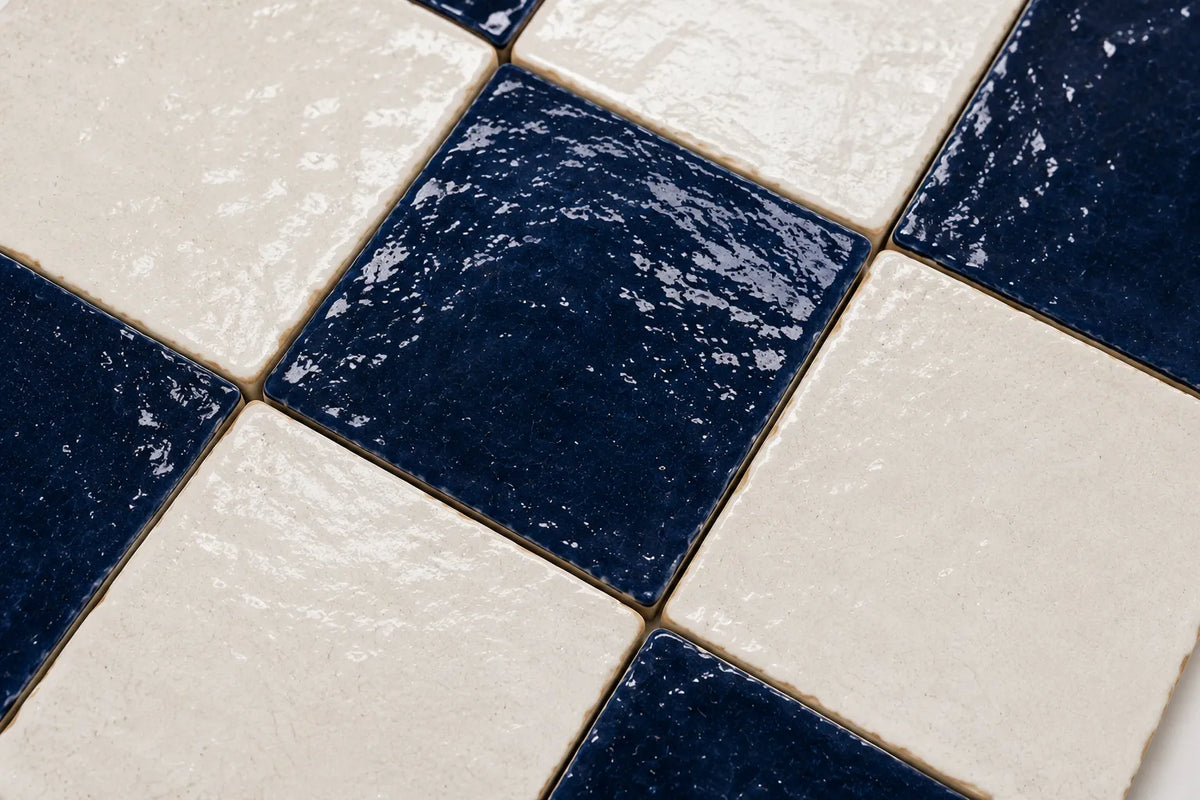
- Checkerboard patterns using contrasting colors and finishes
The materials should be reviewed together before installation to ensure that the finish combination feels intentional.
Choosing Marble Tile Size for a Bathroom
Finish is only one part of the decision. Tile size also affects appearance, traction, installation, and maintenance.
Small Mosaics
Small mosaics are commonly used on shower floors and decorative areas. They create more grout joints and can follow slopes more effectively.
Medium-Format Tiles
Sizes such as 6×12, 12×12, and 12×24 are versatile for bathroom floors and walls. They balance visual scale with manageable installation.
Large-Format Tiles
Large-format marble can create a luxurious, continuous appearance with fewer grout joints. However, the substrate must be properly prepared, and the tile should be suitable for the application.
Larger tiles may not be appropriate for standard shower floors because they do not easily follow multiple drainage slopes.
Design Styles for Honed Marble
Honed marble works especially well in:
- Minimalist bathrooms
- Spa-inspired interiors
- Organic modern design
- Mediterranean interiors
- European country homes
- Transitional bathrooms
- Quiet luxury interiors
Pair honed marble with natural oak, warm white paint, aged brass, brushed nickel, limewash, plaster, and linen textures.
Design Styles for Polished Marble
Polished marble works especially well in:
- Traditional bathrooms
- Luxury hotel-inspired interiors
- Art Deco spaces
- Formal powder rooms
- Glamorous contemporary bathrooms
- Classic European interiors
- High-contrast designs
Pair polished marble with polished nickel, brass, dark cabinetry, mirrored surfaces, decorative lighting, and crisp architectural details.
How Much Extra Marble Should You Order?
Additional marble is needed for cutting, breakage, layout adjustments, veining selection, installation waste, and future repairs.
- Order approximately 10%–15% additional material for straightforward layouts.
- Consider approximately 15%–20% additional material for diagonal layouts, complex rooms, checkerboards, or patterns with extensive cuts.
Natural stone should be blended from multiple boxes before installation. Additional material allows the installer to distribute color and veining more effectively.
Retaining extra tile after installation is strongly recommended because future batches may not match the original stone exactly.
Inspecting Marble Before Installation
All marble should be inspected and dry-laid before installation.
- Open several boxes at the same time.
- Review the range of color and veining.
- Compare the finish and surface quality.
- Blend tiles from different boxes.
- Place highly distinctive pieces intentionally.
- Confirm the layout before permanent installation.
Natural veining, tonal variation, small pits, mineral lines, and surface differences may be inherent characteristics of marble and are not necessarily defects.
Installation generally indicates acceptance of the material.
Frequently Asked Questions
Is honed or polished marble better for a bathroom floor?
Honed marble is generally preferred for bathroom floors because it has a lower sheen and may provide more surface grip than polished marble. Product specifications and application requirements should always be reviewed.
Is polished marble too slippery for a bathroom?
Polished marble can become slippery when wet. It is generally more appropriate for walls, vanity backsplashes, tub surrounds, and decorative surfaces than for heavily used wet floors.
Can polished marble be used on shower walls?
Yes, polished marble can create a luminous and luxurious shower wall when the selected product is suitable for wet-area wall installation.
Can honed marble be used on shower walls?
Yes. Honed marble creates a softer, spa-like appearance and may make water spots and light wear less visually noticeable.
What is the best marble finish for a shower floor?
Honed mosaics are generally preferred because the lower-sheen surface and additional grout joints may provide better traction. Always confirm that the product is approved for shower-floor use.
Does polished marble stain less than honed marble?
Polished marble may absorb some substances more slowly because of its denser finished surface, but it can still stain. Both finishes should be properly sealed and maintained.
Does sealing prevent marble from etching?
No. Sealer can help reduce absorption and staining, but it does not prevent acidic substances from etching marble.
Can honed and polished marble be used in the same bathroom?
Yes. A common combination is honed marble on the floor and polished marble on the walls. This provides a practical walking surface while preserving the reflective beauty of polished stone.
Which finish shows scratches more easily?
Fine scratches are often more visible on polished marble because they interrupt the reflective surface. Honed marble may disguise light scratching more effectively.
Which marble finish is easier to maintain?
Neither finish is maintenance-free. Honed marble may hide scratches and etching better, while polished marble may be easier to wipe clean but can show water spots and surface damage more clearly.
Explore Marble Tile for Bathroom Projects
Arda Ogan Tile Store offers carefully selected marble tiles, mosaics, trims, and decorative formats in honed and polished finishes for bathrooms, kitchens, entryways, and residential or commercial projects.
Browse our marble collections, request samples, or contact our team for assistance with finish selection, material quantities, custom production, and professional project pricing.


Leave a comment
This site is protected by hCaptcha and the hCaptcha Privacy Policy and Terms of Service apply.