

Honed vs Polished Marble (Plus Brushed and Tumbled): How to Choose a Marble Finish
Marble is one of the most beautiful natural stones used in residential and commercial design. But choosing the right marble finish is just as important as choosing the stone itself. Each finish changes the texture, shine, slip resistance, and mood of the space.
Quick answer: polished marble is glossy and shows veining most vividly, but it is more slippery when wet and shows etching from acids. Honed marble has a matte, satin surface that hides etching and wear better and gives more grip, so it is usually the better choice for floors, kitchens and busy bathrooms. Brushed and tumbled finishes add texture and an aged look.
This guide compares honed and polished marble side by side, then explains brushed and tumbled marble and how to choose the right finish for each room.
Honed vs Polished Marble: Key Differences
| Feature | Honed marble | Polished marble |
|---|---|---|
| Look | Matte to satin, soft and modern | High gloss, mirror-like reflection |
| Color and veining | Slightly softer, lighter tone | Deeper color, most vivid veining |
| Slip resistance | Better grip, especially when wet | Slippery when wet; best on walls |
| Etching (acids such as lemon, wine, vinegar) | Still etches, but marks blend into the matte surface | Etch marks show as dull spots on the shine |
| Scratches and wear | Wear is less visible | Scratches and traffic paths show more |
| Staining and sealing | More open surface; seal and reseal regularly | Tighter surface, but still needs sealing |
| Best uses | Floors, kitchens, bathroom floors, shower walls | Walls, backsplashes, feature panels, formal low-traffic floors |
Both finishes are the same stone underneath, so durability is similar: the difference is how the surface looks, feels and ages. A polished floor can be honed later by a stone restoration professional if you want a matte look.
1. Honed Marble
Honed marble is smooth, satin-like, and has a matte or low-sheen appearance. The surface is ground flat without the final polishing steps, giving it a soft and modern look.
Characteristics:
- Matte finish (no glossy reflection)
- Soft and velvety feel
- Scratches and wear are less visible than on polished marble
- Etch marks blend in rather than standing out
Best for:
- Bathroom floors
- Kitchens
- High-traffic areas
- Modern and minimalistic designs
2. Polished Marble
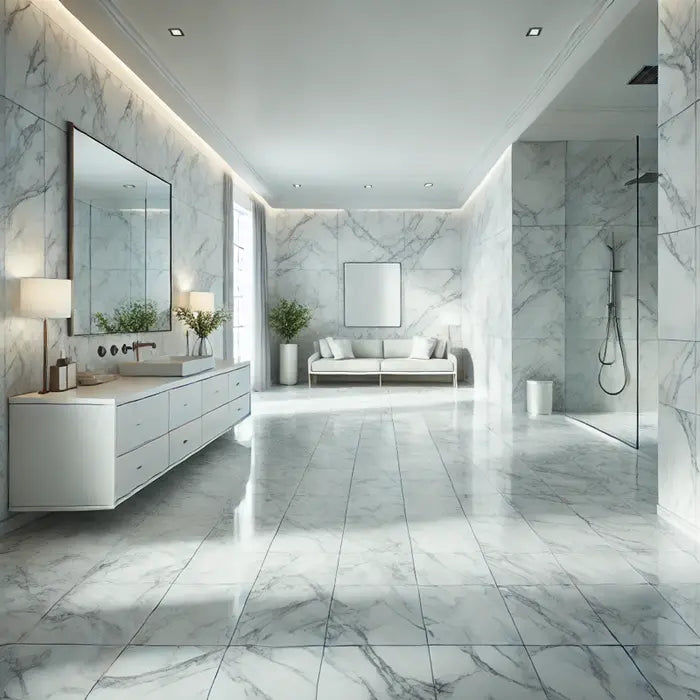
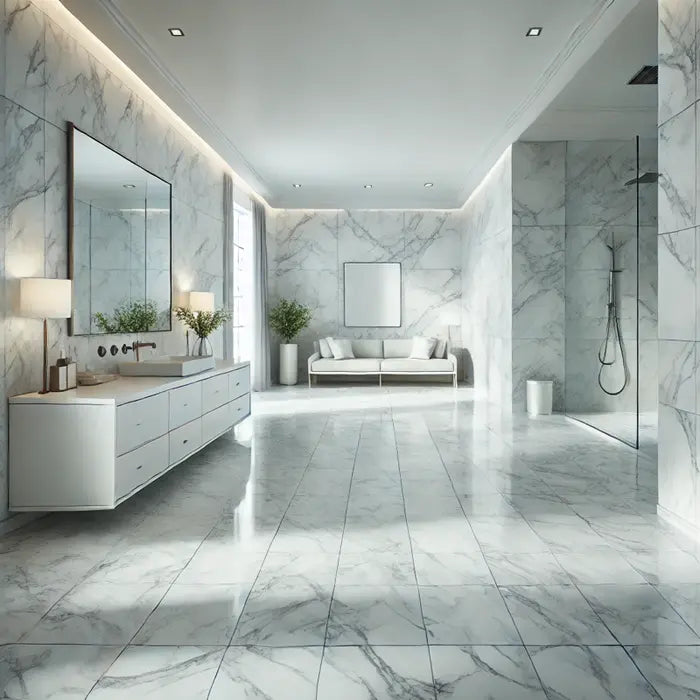
Polished marble has a reflective, mirror-like shine that highlights the stone’s natural veining. It is smooth, elegant, and often used in luxury interiors.
Characteristics:
- High-gloss surface
- Highly reflective finish
- Enhances color and veining
- More prone to visible scratches and etching
Best for:
- Bathroom walls
- Accent walls and feature panels
- Formal entryways
- Low-moisture, low-traffic areas
3. Brushed Marble
Brushed marble has a textured surface created by gently brushing the stone with abrasive brushes. This finish adds warmth and subtle rustic character to any room.
Characteristics:
- Slightly textured, slip-resistant surface
- Soft, weathered appearance
- More variation in tone and texture
Best for:
- Entryways and mudrooms
- Outdoor covered areas (when properly rated)
- Rustic, farmhouse, or transitional interiors
4. Tumbled Marble
Tumbled marble has the most rustic and aged appearance. The tiles are literally “tumbled” with sand or small stones to make edges soft and uneven.
Characteristics:
- Soft, rounded edges
- Antique or old-world look
- More surface texture for grip
Best for:
- Shower floors (with proper waterproofing)
- Outdoor paths and patios (when rated for exterior use)
- Traditional, Mediterranean, or Tuscan designs
What About Glazed Tile Finishes?
Porcelain and ceramic tiles often have a glazed finish instead: a fired-on protective layer that adds color and shine. Glazed tiles resist stains well and are easy to clean, which makes them a practical choice for kitchen and bathroom walls. Unlike marble, the glazed surface does not need sealing, although grout lines still benefit from a sealer.
Best Finish by Room
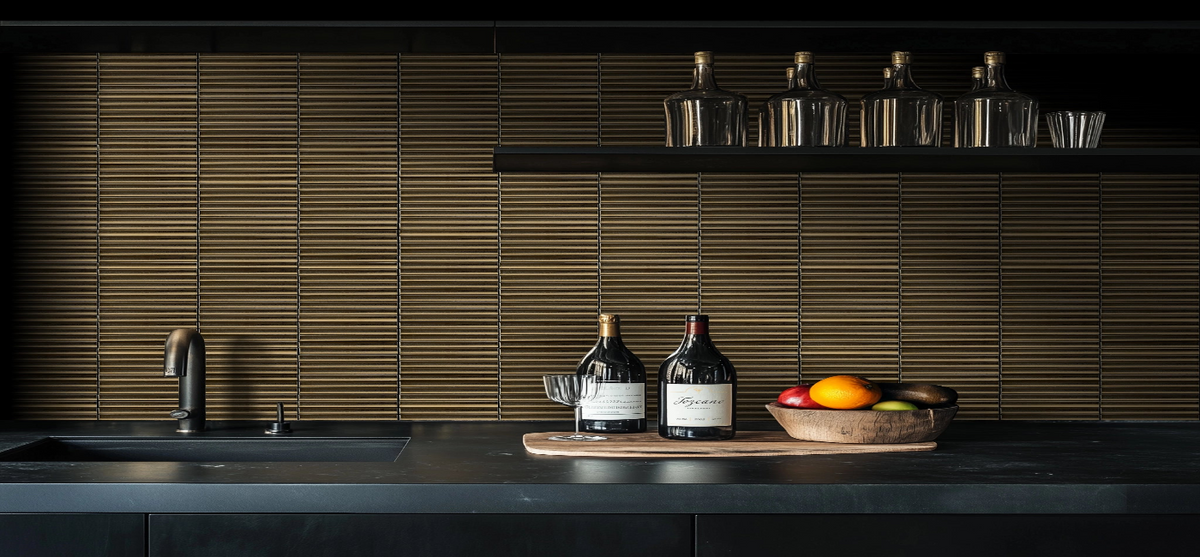
- Kitchens: Polished or glazed finishes work beautifully on backsplashes. For kitchen floors, honed natural stone or matte porcelain helps prevent slips.
- Bathrooms: Honed, brushed, or tumbled finishes suit floors and shower areas. Polished marble makes an excellent wall accent when it is sealed. See our room-by-room bathroom guide for detail.
- Entryways: Choose durable, slip-resistant finishes such as honed or brushed marble, or textured porcelain.
How to Choose the Right Marble Finish
- For floors: Honed or brushed finishes are usually best.
- For walls: Polished or honed, depending on how reflective you want the surface.
- For wet areas: Honed or tumbled for better traction.
- For modern designs: Honed marble pairs beautifully with clean lines.
- For luxury, formal spaces: Polished marble makes a strong statement.
- For rustic styles: Brushed or tumbled marble fits the look perfectly.
Many of our marble tiles, including Calacatta Gold, Bianco Dolomite, Crema Marfil and Nero Marquina, come in both honed and polished finishes, so you can use polished on the walls and honed on the floor in the same stone.
Not sure which finish suits your space? Order samples in two finishes ($19.90 each, free shipping, credited to your order within 60 days) and compare them in your own light before you decide.
Honed vs Polished Marble FAQ
Is honed or polished marble better for a bathroom floor?
Honed marble is usually better for bathroom floors because it is less slippery when wet and hides etching and wear. Polished marble works well on bathroom walls and vanity backsplashes.
Is honed or polished marble better for a kitchen?
Honed marble is the practical choice for kitchen floors and busy work areas, because etch marks from lemon, wine or vinegar blend into the matte surface. Polished marble suits backsplashes, where it is splashed less often and the shine shows off the veining.
Does polished marble etch?
Yes. All marble reacts with acids. On polished marble, an etch shows as a dull spot in the shine; on honed marble the same mark is much harder to see. Sealing helps against stains but does not prevent etching.
Does honed marble stain more easily?
Honed marble has a slightly more open surface, so it can absorb spills faster. Seal it after installation, reseal it regularly, and wipe spills promptly.
Can polished marble be honed later?
Yes. A stone restoration professional can hone a polished floor to a matte finish, or re-polish a honed surface.
Conclusion
Each marble finish offers a unique aesthetic and performance profile. Whether you prefer the glossy elegance of polished marble or the understated beauty of honed finishes, understanding the differences helps ensure a flawless and lasting result.
If you’d like help matching finishes across floors, walls, mosaics, and trims, the Arda Ogan team can suggest coordinated options from our marble and stone collections.
Shop Related Collections
Recommended Reading

Written by Arda Ogan
Founder. 20+ years sourcing natural stone, porcelain and ceramic for industry-leading brands and for US residential and commercial projects.

1 comment
I am looking to cover scratches on
My matble bathroom floor,.
Du you think a transparent gloss
Can cover the scratches ?
Brigitte Hofmsnn
Leave a comment
This site is protected by hCaptcha and the hCaptcha Privacy Policy and Terms of Service apply.