

Green and White Checkerboard Tile Ideas for Kitchens, Bathrooms, and Entryways
Green and white checkerboard tile brings together classic pattern, natural color, and architectural character. The familiar checkerboard layout feels timeless, while shades of emerald, sage, olive, forest green, and soft white give the pattern a more distinctive and contemporary appearance.
Whether created with natural marble, porcelain, ceramic, or artisanal tile, a green and white checkerboard pattern can become the defining feature of a kitchen, bathroom, entryway, mudroom, or commercial interior.
In this guide, we explore how to select the right material, tile size, layout, grout color, and surrounding finishes for a green and white checkerboard tile installation.
Why Green and White Checkerboard Tile Works
Traditional checkerboard floors are often associated with black and white stone. Replacing black with green creates a softer and more organic interpretation of the pattern.
Green introduces color without losing the checkerboard’s architectural structure. Depending on the shade and material, the finished surface can feel:
- Classic and European
- Dramatic and luxurious
- Organic and nature-inspired
- Relaxed and Mediterranean
- Historic yet contemporary
White tile provides contrast and prevents the pattern from becoming visually heavy. Together, the two colors create movement while remaining versatile enough to complement wood cabinetry, painted millwork, brass fixtures, natural stone countertops, and neutral walls.
Choosing the Right Shade of Green
The shade of green will strongly influence the room’s overall atmosphere.
Deep Emerald and Forest Green
Deep green checkerboard tile creates a rich, formal appearance. It works especially well in traditional kitchens, dramatic powder rooms, boutique hotel interiors, libraries, and refined entryways.
Pair deep green and white tile with:
- Warm brass or antique bronze fixtures
- Walnut or dark oak cabinetry
- Cream-colored walls
- Honed marble countertops
- Traditional architectural details
Dark green marble may include white veining, tonal movement, and natural variation that gives every tile an individual appearance.
Sage and Soft Green
Sage green creates a quieter and more relaxed checkerboard pattern. It is well suited for kitchens, bathrooms, mudrooms, laundry rooms, and interiors inspired by European country homes.
Pair sage green and white checkerboard tile with:
- White oak cabinetry
- Warm off-white paint
- Brushed nickel or unlacquered brass
- Handmade ceramic wall tile
- Natural linen and woven textures

Olive and Earthy Green
Olive green creates a warm, grounded look that works particularly well in Mediterranean, rustic, and transitional interiors.
This shade pairs beautifully with:
- Terracotta accents
- Travertine
- Limestone
- Warm wood tones
- Plaster or limewash walls
Blue-Green and Teal
Blue-green checkerboard tile offers a more decorative and unexpected appearance. Depending on the surrounding finishes, it can feel coastal, Art Deco-inspired, or contemporary.
Blue-green shades can work especially well in powder rooms, bar areas, feature walls, and smaller rooms where the tile becomes a memorable focal point.
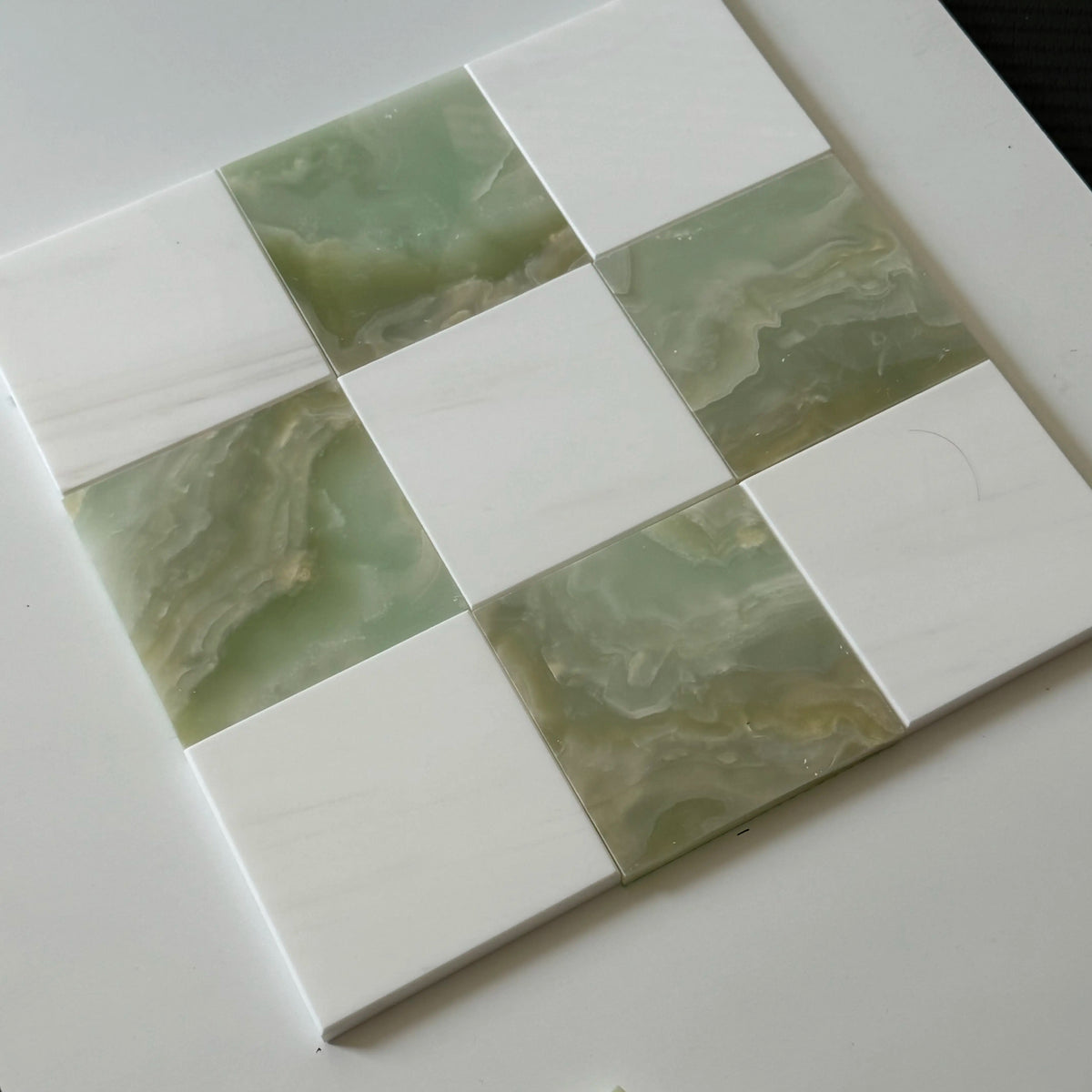
Green and White Marble Checkerboard Tile
Natural marble is one of the most luxurious materials for a green and white checkerboard installation.
Green marble may display dramatic white veining, cloudy movement, mineral variation, or contrasting tonal areas. White marble can range from crisp and lightly veined to warm and softly clouded.
Because natural stone is formed by nature, no two pieces will be exactly alike. This variation is one of the principal reasons marble checkerboard floors feel richer and more dimensional than printed surfaces.
Advantages of Marble Checkerboard Tile
- Authentic natural color and veining
- Timeless architectural appearance
- Each tile is unique
- Available in honed or polished finishes
- Suitable for many residential and commercial applications
- Can coordinate with marble mosaics, trims, and architectural details
Explore our marble tile collections to discover natural stone options for residential and commercial projects.
Honed or Polished Marble?
A honed finish has a smooth, low-sheen appearance. It generally creates a softer, more understated checkerboard floor and may be preferable for areas where a highly reflective surface is not desired.
A polished finish reflects more light and intensifies the color and veining of the stone. It can create a more formal and luxurious appearance, particularly on walls and in decorative spaces.
Because suitability depends on the stone, application, finish, and installation conditions, material specifications should always be reviewed before placing an order.
Natural stone typically requires sealing and should be maintained with cleaners formulated for stone surfaces.
Green and White Porcelain Checkerboard Tile
Porcelain offers another practical way to introduce a green and white checkerboard pattern.
Porcelain tile may be especially appropriate for busy households, commercial interiors, mudrooms, kitchens, and other areas where durability and straightforward maintenance are priorities.
Advantages of Porcelain Checkerboard Tile
- Durable and easy to maintain
- Consistent thickness and sizing
- Available in a wide range of colors
- Often suitable for floors and walls
- May require less maintenance than natural stone
- Useful for residential and commercial projects
Porcelain can create either a clean, graphic checkerboard or a softer stone-inspired appearance. When selecting porcelain, review the product’s technical specifications, slip rating, finish, and approved applications.
Where to Use Green and White Checkerboard Tile
1. Kitchen Floors
A green and white checkerboard kitchen floor creates a strong visual foundation without requiring every other element in the room to be decorative.
The pattern works particularly well with:
- Natural wood cabinetry
- Cream or warm white cabinets
- Marble countertops
- Brass hardware
- Plaster range hoods
- Handmade ceramic backsplashes
For a classic appearance, install the checkerboard pattern parallel to the cabinetry and walls. For additional movement, rotate the layout diagonally.
A diagonal checkerboard can make a narrow kitchen feel more dynamic, although it generally requires more perimeter cuts and additional material.
2. Kitchen Backsplashes
Green and white checkerboard tile is not limited to floors. A smaller checkerboard pattern can create a striking kitchen backsplash.
A checkerboard backsplash works best when surrounding surfaces are relatively restrained. Consider pairing it with simple countertops and cabinetry so the pattern can remain the focal point.
For a more refined appearance, use:
- Smaller-format tiles
- A narrow grout joint where the product permits
- Coordinating edge trims
- A simple countertop without excessive movement
Always verify that the selected product is approved for wall applications and review the manufacturer’s installation recommendations.
3. Bathroom Floors
Green and white checkerboard bathroom tile can create either a historic or contemporary atmosphere.
In a traditional bathroom, combine the pattern with:
- A pedestal sink
- A freestanding bathtub
- Polished nickel fixtures
- Wall paneling
- White subway tile
In a contemporary bathroom, combine it with:
- Floating cabinetry
- Frameless glass
- Minimal plumbing fixtures
- Large-format wall tile
- Warm neutral paint
For wet areas, confirm that the tile format, finish, and installation system are appropriate for the intended application.
4. Powder Rooms
A powder room is an ideal space for a bold checkerboard pattern. Because the room is usually compact, the floor can make a memorable impression without competing with a large number of other finishes.
A deep green and white marble checkerboard floor can be paired with a dramatic wall color, decorative mirror, stone vanity, or sculptural lighting.
5. Entryways and Foyers
Checkerboard tile has a long architectural history in entry halls and foyers. Green and white gives this traditional application a more distinctive personality.
In an entryway, the pattern can help define the transition from exterior to interior while creating a strong first impression.
Consider continuing one of the checkerboard colors into nearby rooms through paint, upholstery, artwork, or decorative accessories. This helps the patterned floor feel connected to the rest of the home.
6. Mudrooms and Laundry Rooms
Green and white checkerboard tile can bring personality to hardworking utility spaces.
Porcelain may be a practical choice for these areas because of its durability and maintenance characteristics. A softer sage-and-white combination can keep the room feeling bright and welcoming.
Coordinate the floor with:
- Built-in storage
- Wood benches
- Brass or black hooks
- Utility sinks
- Painted cabinetry
- Woven baskets
7. Feature Walls and Fireplace Surrounds
A checkerboard pattern can also be used vertically.
Green and white tile can create a distinctive fireplace surround, bar backsplash, accent wall, or hospitality feature. When used on a wall, the pattern becomes more graphic and immediately noticeable.
For a balanced composition, carefully plan where the pattern begins and ends. Full and evenly sized perimeter pieces generally create a more intentional result.
Straight Versus Diagonal Checkerboard Layouts
The orientation of the checkerboard pattern changes how the room is perceived.
Straight Checkerboard Layout
In a straight layout, tile edges run parallel to the walls.
This approach feels:
- Structured
- Classic
- Orderly
- Architectural
- Easier to align with cabinetry and room boundaries
A straight layout may also require fewer complex perimeter cuts than a diagonal pattern.
Diagonal Checkerboard Layout
In a diagonal layout, the checkerboard pattern is rotated approximately 45 degrees.
This approach feels:
- More dynamic
- Visually expansive
- Traditional and European
- Particularly effective in entryways and narrow rooms
Diagonal layouts usually require additional cutting and may result in more material waste. Accurate planning and professional installation are important.
Selecting the Right Tile Size
Tile size affects both the visual scale of the pattern and the number of grout lines in the room.
Small Checkerboard Tiles
Smaller tiles create a detailed, decorative appearance and are appropriate for:
- Powder rooms
- Backsplashes
- Small bathrooms
- Fireplace surrounds
- Bar areas
- Decorative borders
Medium Checkerboard Tiles
Medium-format squares are versatile and work well in:
- Kitchens
- Bathrooms
- Mudrooms
- Entryways
- Laundry rooms
They provide a visible pattern without overwhelming most residential interiors.
Large Checkerboard Tiles
Large-format checkerboard designs create a bold, architectural effect. They are often most successful in:
- Spacious kitchens
- Large foyers
- Open-plan interiors
- Commercial spaces
- Hospitality projects
Before selecting a large format, consider the room’s dimensions and how many complete checks will be visible. In a very small room, an oversized pattern may not have enough space to develop fully.
Choosing a Grout Color
Grout color can either emphasize or soften a checkerboard pattern.
White or Light Grout
Light grout blends naturally with the white tile but may create a visible outline around the green pieces. It keeps the installation bright but may require more maintenance in busy floor applications.
Warm Gray Grout
Warm gray is often a versatile choice because it can complement both green and white without creating excessive contrast.
Grout Matched to the Green Tile
A darker grout may visually connect with the green squares, but it can create stronger outlines around the white pieces.
Before making a final decision, test grout samples against both tile colors. Grout can change the perceived color and contrast of the completed installation.
Coordinating Green and White Checkerboard Tile
Because checkerboard is already a strong pattern, the surrounding materials should support rather than compete with it.
Cabinet Colors
Suitable cabinet colors may include:
- Warm white
- Cream
- Natural oak
- Walnut
- Muted sage
- Deep green
- Soft gray
Metal Finishes
Green and white tile pairs well with:
- Unlacquered brass
- Antique brass
- Polished nickel
- Brushed nickel
- Oil-rubbed bronze
- Matte black
Wall Colors
Consider warm neutrals rather than overly cool whites. Soft ivory, plaster beige, pale stone, muted green, and warm gray can help unify the palette.
Countertops
Simple countertops generally work best with a checkerboard floor. Consider lightly veined marble, limestone-inspired quartz, soapstone, or restrained solid-color surfaces.
If both the floor and countertop have dramatic movement, compare full-size samples before committing to the combination.
How Much Extra Tile Should You Order?
Additional material is necessary for cuts, layout adjustments, breakage, installation waste, and future repairs.
- Order approximately 10%–15% additional material for straightforward layouts.
- Consider approximately 15%–20% additional material for diagonal installations, complex rooms, or patterns requiring extensive cuts.
Natural stone projects may require additional material for blending color and veining. The appropriate amount depends on the room, tile format, installation pattern, and material characteristics.
Because dye lots, stone blocks, and production batches can vary, retaining extra tile after installation is strongly recommended.
Inspecting and Blending Tile Before Installation
All tile should be inspected before installation.
For natural stone and products with intentional variation:
- Open and review multiple boxes.
- Examine color, veining, shade, and surface variation.
- Dry-lay the material before installation.
- Blend tiles from different boxes.
- Position highly distinctive pieces intentionally.
- Confirm the layout before permanent installation begins.
Installation generally indicates acceptance of the material, so any concerns should be addressed before tiles are set.
Is Green and White Checkerboard Tile Timeless?
Checkerboard tile has been used for centuries in residential, civic, and commercial architecture. Its continued appeal comes from the simplicity of the pattern: two alternating colors arranged in a clear geometric layout.
Green and white adds personality while preserving that timeless structure. The result can feel historic, contemporary, Mediterranean, traditional, or eclectic depending on the material and surrounding design.
For lasting appeal, select authentic materials, balanced colors, and a scale appropriate for the room rather than relying only on short-term design trends.
Frequently Asked Questions
Is green and white checkerboard tile suitable for a kitchen?
Yes, provided the selected product is approved for floor or wall use in the intended location. Porcelain and many natural stones can be appropriate for kitchens, but product specifications, finish, maintenance, and installation requirements should be reviewed.
Is marble checkerboard tile difficult to maintain?
Marble requires more care than many porcelain surfaces. It may need sealing and should be cleaned with products suitable for natural stone. Acidic or abrasive cleaners should be avoided.
Can checkerboard tile be installed diagonally?
Yes. A diagonal checkerboard creates more visual movement and can make a room feel broader. It generally requires more perimeter cuts, careful layout planning, and additional material.
What grout color is best for green and white checkerboard tile?
Warm gray or a soft neutral is often a balanced choice, but the best color depends on the exact shades of tile and the desired contrast. Test grout samples against both colors before installation.
Can green and white checkerboard tile be used on walls?
Yes, when the selected tile is approved for wall use. Checkerboard patterns can create striking backsplashes, fireplace surrounds, bar fronts, and decorative feature walls.
How much extra checkerboard tile should I order?
Approximately 10%–15% additional material is commonly recommended for standard layouts. Diagonal patterns, complicated rooms, natural stone blending, and installations with extensive cuts may require 15%–20% additional material.
Discover Green and White Checkerboard Tile
Green and white checkerboard tile offers a distinctive balance of tradition, natural color, and geometric design. From dramatic marble entryways to practical porcelain mudroom floors, the pattern can be adapted to many residential and commercial interiors.
Arda Ogan Tile Store offers carefully selected natural stone, porcelain, ceramic, Zellige, and checkerboard tile collections for kitchens, bathrooms, entryways, feature walls, and professionally designed projects.

Leave a comment
This site is protected by hCaptcha and the hCaptcha Privacy Policy and Terms of Service apply.